The Vintage Longines Conquest: Vintage Precision
Launched in 1954, the Longines Conquest brought observatory-grade movement quality to a water-resistant, self-winding wristwatch. Decades later, it remains one of the most intelligent buys in vintage collecting.
There is a category of vintage watch that does not trade on mythology. No moon missions, no royal warrants, no Hollywood endorsements. It trades instead on what it actually does: keep exceptional time, in a well-made case, at a price that has never pretended to be anything other than honest. The vintage Longines Conquest is the clearest example of this category, and it has been making that argument, without fanfare, since 1954.
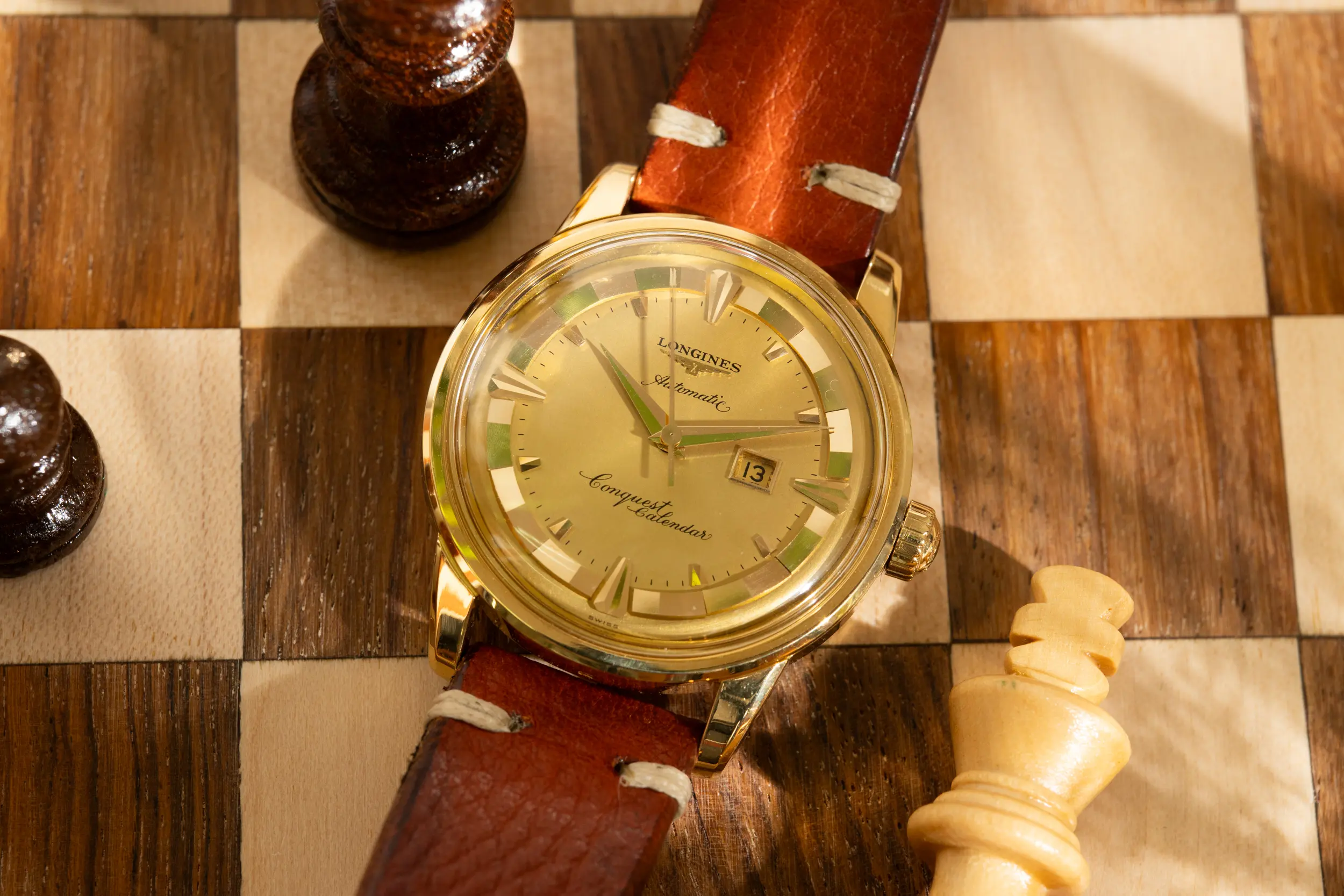
A Line Built on Legitimacy
To understand the Conquest, you have to understand what Longines was in the mid-twentieth century. The company, based in Saint-Imier in the Swiss Jura, had spent the better part of a century competing in official timing trials. Observatory chronometry competitions, the kind where movements were submitted to national observatories and rated over weeks for accuracy, rate stability, and performance across temperatures, were the proving ground of the era. Longines won them with regularity. The calibers that came out of Saint-Imier in the 1940s and 1950s were not marketing instruments. They were the product of a company that measured itself against the most exacting standards available.
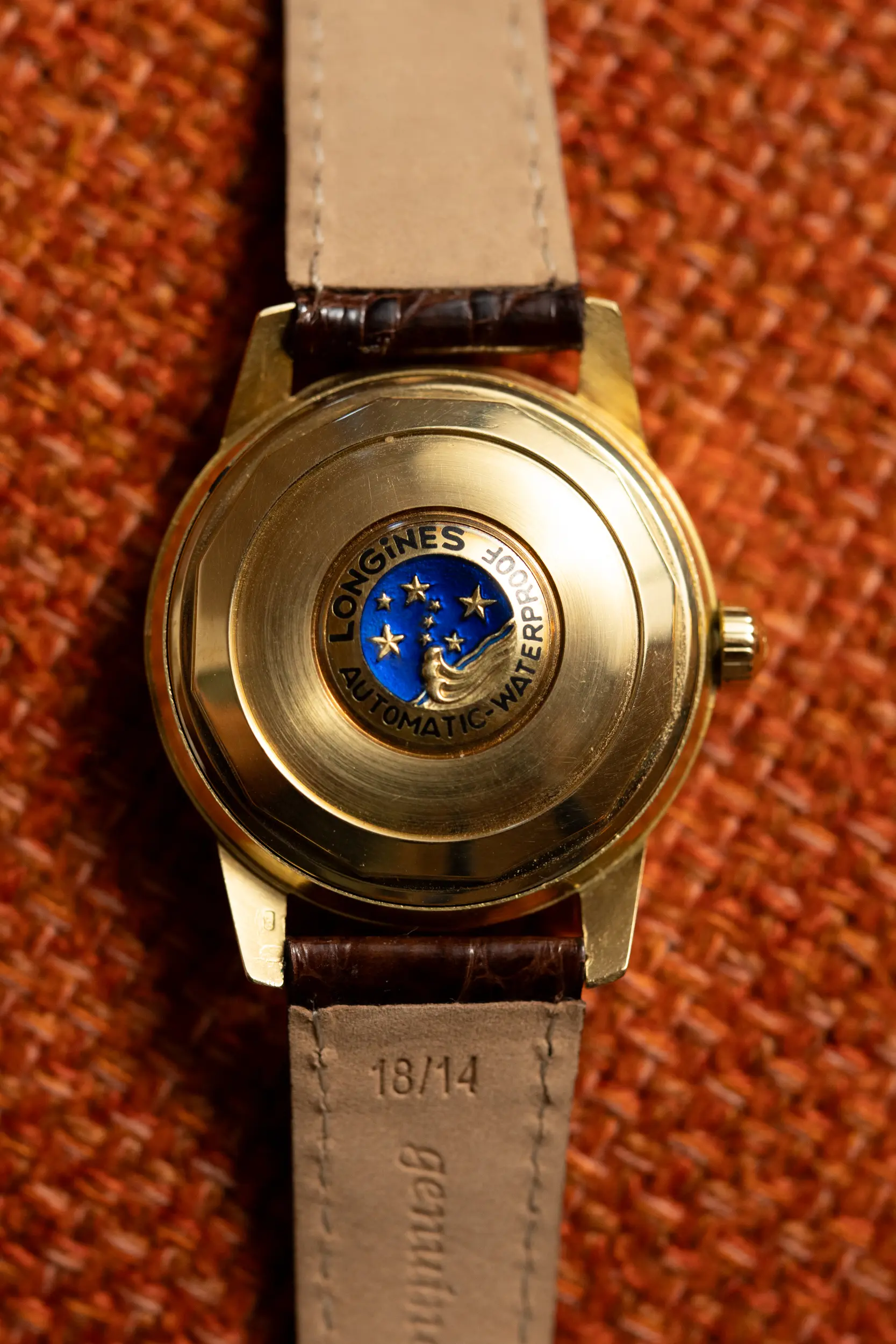
The Conquest, launched in 1954, was the vehicle through which that precision reached the wrist in a practical form. It was the first Longines collection to have its name formally protected by the Federal Intellectual Property Office in Berne, a detail that reflects how seriously the company regarded the proposition. Self-winding and water-resistant from the outset, at a time when those two features together were still far from standard, the Conquest was positioned as the watch for a person who needed genuine performance and refused to treat those two requirements as incompatible with elegance.
The Calibers: Where the Reputation Was Built
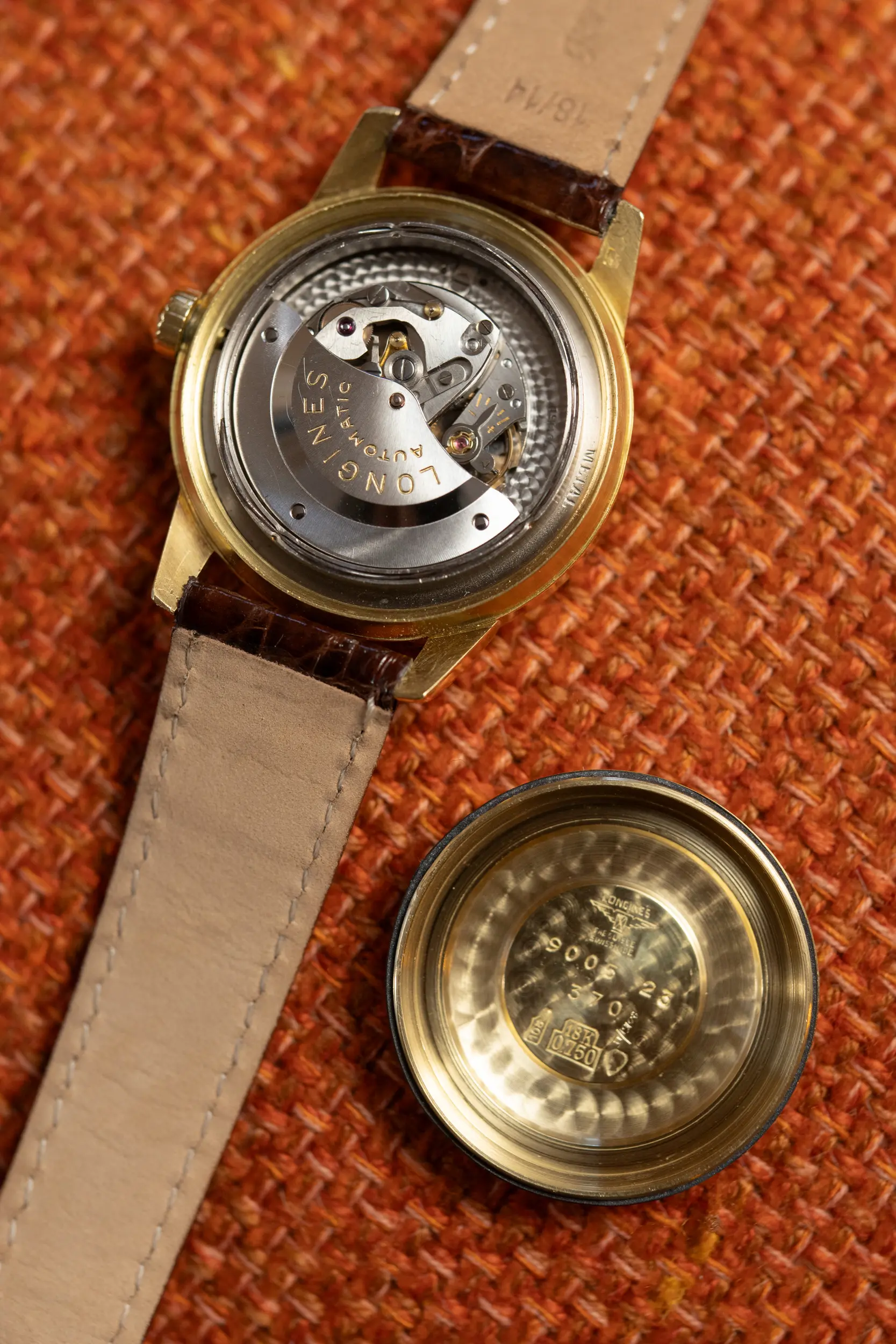
The early Conquest models were powered by movements that had no reason to apologise to anyone. The Caliber 19AS, a thin automatic with a 19-jewel count and a frequency of 18,000 alternances per hour, was among the first to appear in the collection. Compact, reliable, and extraordinarily well-finished for a production movement of its era, it established the standard that subsequent Conquest calibers maintained.
Later examples carried the Caliber 290, another automatic that refined the thin-movement formula further. These were not ébauches dressed up in a recognisable name. They were in-house movements from a manufacture that understood what precision actually required: careful adjustment, quality materials in the escapement, and tolerances that the mass market of the period rarely approached.
The practical result was a watch that ran accurately, required servicing no more often than any well-made automatic, and whose movements remained serviceable decades later because they had been built with enough integrity to reward the effort. This is not a small thing. Many vintage watches from the same period are beautiful to look at and impossible to restore to proper function. The Conquest's movements, when found in honest condition, respond well to a competent watchmaker.
The Design: Sport Without Anxiety
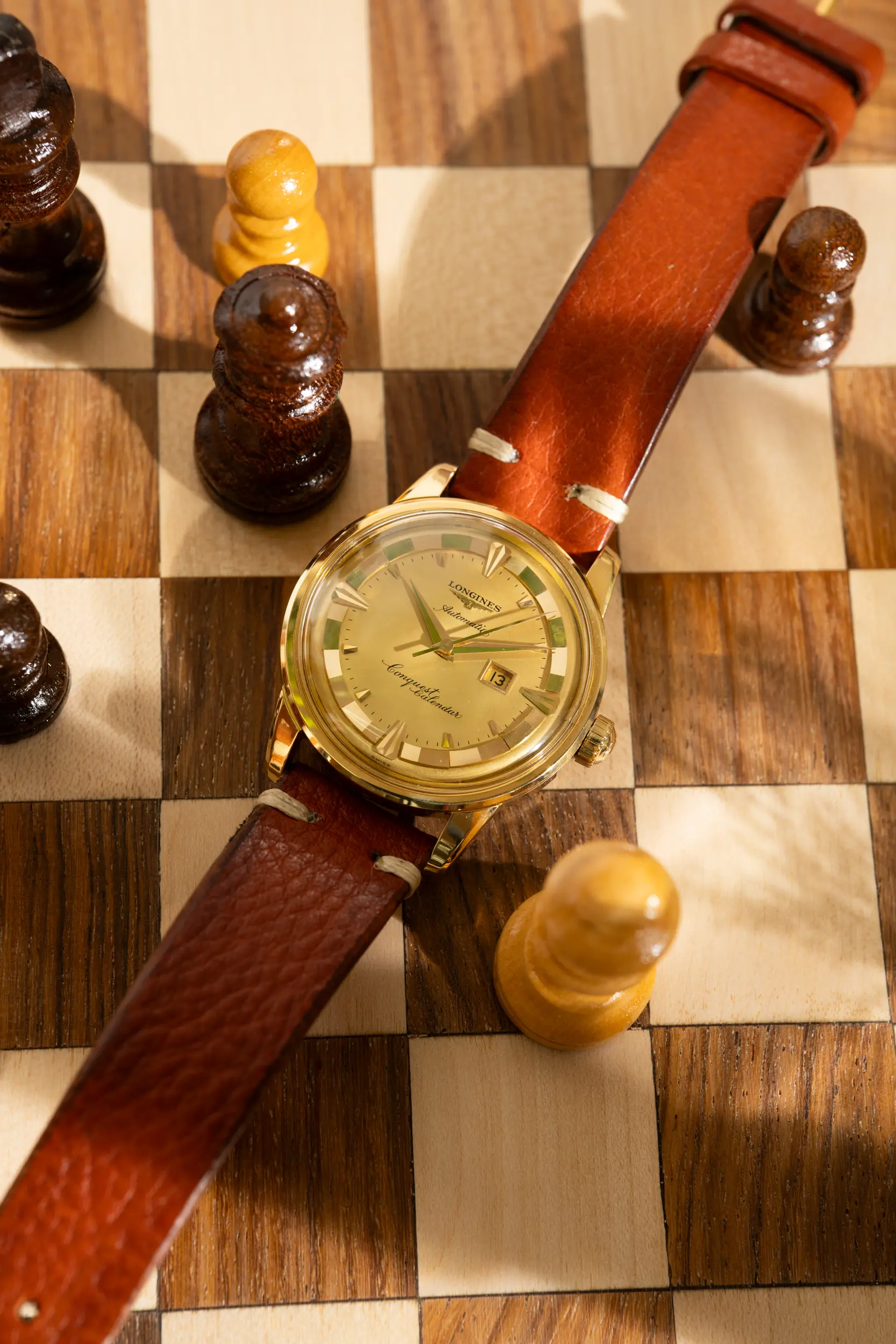
The Conquest dials of the 1950s and 1960s occupy a particular aesthetic territory: they are sporty without being aggressive, elegant without being precious. Applied baton indices, clean Arabic or Roman numerals depending on the variant, and a dial surface that catches light without overwhelming it. The hands, whether baton or dauphine, are sized to be read across a desk or a cockpit without demanding that the wearer stop and search for the time.
Cases ran typically in the 34 to 36mm range through the late 1950s, which reads as modest today but was entirely proportionate for the period and wears exceptionally well on wrists that find modern case diameters excessive. Materials ranged from stainless steel to gold-filled and solid gold depending on the reference, with the steel examples offering the best combination of durability and value for today's collector.
The calendar variants, those fitted with a date window, added practical utility without disrupting the dial's composition. A date aperture on a Conquest of this era is never an intrusion: it is framed correctly, positioned with intention, and sized to inform rather than to dominate.
Reference Guide: The 9000 Series
The backbone of the vintage Conquest is the 9000 reference family, introduced at launch in 1954 and produced through the late 1950s and into the 1960s. Understanding the numbering logic makes navigating the market considerably easier.
All 9000-series Conquests share the same 35mm stainless steel or gold case architecture, the same 18mm lug width, and the same fundamental design language. What the last digits tell you is the case material and whether a calendar complication is fitted.
Without date (Caliber 19AS):
| Reference | Case material |
|---|---|
| 9000 | Stainless steel |
| 9001 | Solid 18k yellow gold |
| 9002 | Gold-capped (gold-filled) |
| 9003 | De luxe (typically solid gold with enhanced finishing) |
With date (Caliber 19ASD):
| Reference | Case material |
|---|---|
| 9004 | Stainless steel |
| 9005 | Solid 18k yellow gold |
| 9006 | All Guard (enhanced water and shock protection) |
| 9007 | Gold-capped |
| 9008 | De luxe |
The distinction between 19AS and 19ASD is simply the calendar module: the ASD adds the date disc and quick-set mechanism. Both beat at 18,000 alternances per hour, carry 19 jewels, and deliver around 40 hours of power reserve. The calendar module does not meaningfully alter the movement's reliability or repairability.
The Pie Pan Dial
The most sought-after Conquest dials from this period are what collectors call "pie pan" dials: a stepped construction where the chapter ring sits slightly raised relative to a sunken centre field, creating a subtle concavity that catches and redirects light in a way no flat dial can replicate. The effect is understated to the point of being invisible in bad light and magnetic in good light.
Pie pan dials appear primarily on the earliest 9000 and 9001 references from the mid to late 1950s. They represent the Conquest at its most refined and command a premium accordingly. Later production moved toward flat dials, which are clean and handsome but lack that particular optical quality.
Early Production Note
The very first Conquest examples, produced in 1954 and 1955, left the factory without luminous material on dials or hands. Lume was added in subsequent production years. An unlume dial is not a defect: it is a mark of early manufacture and, depending on the reference, a desirable characteristic.
What Makes It Compelling Today
The vintage watch market has a tendency to price legitimacy according to brand recognition rather than actual merit. This creates persistent mispricing, and the Longines Conquest is one of its clearest beneficiaries.
For the price of a heavily worn, poorly serviced Rolex or Omega of equivalent vintage, a collector can find a Conquest in excellent condition, with a movement that runs correctly, a dial that shows its age honestly rather than apologetically, and a case that has been through the world without losing its shape. The comparison is not flattering to the more famous names.
The Conquest also benefits from being genuinely well-supported in terms of service. Longines' movements from this era are well-documented, parts are available, and competent watchmakers treat them with the respect they deserve. This is a practical consideration that matters more than it is usually credited: a beautiful watch that cannot be properly serviced is a decoration, not a watch.
Finding One
Look for examples from the late 1950s through the mid-1960s as the core of the Conquest's golden period. Dials should be examined carefully: original lacquer or champagne dials age gracefully, but water damage or amateur dial restoration is common on neglected examples and changes the character of the watch irrevocably. Hands are worth checking for original patina, as replacements are often obvious under close inspection.
The movement should be assessed by a watchmaker before purchase if possible, or factored into the price if a service is clearly overdue. A Conquest caliber in good condition is a pleasure to work on; one that has been left dry for twenty years is a project. Know which one you are buying.
Steel examples on original bracelets or leather straps represent the most versatile and durable configuration. Gold-filled cases are attractive but require inspection of the gold layer at the lugs and caseback, where wear concentrates.
The Longines Conquest is not a watch that requires a story told around it. The movement is the story. Seventy years after the first examples left Saint-Imier, they continue to run, to keep time, and to make the case that precision was always the point.
Some watches trade on what people say about them. This one trades on what it does.
Comments
Comments are coming soon. In the meantime, share your thoughts with us on social media.