The IWC Portofino Ref. 3550-01: Quiet Elegance, Honestly Earned
Before IWC became a marketing juggernaut, the Portofino 3550-01 was already making the case for restrained, intelligent dress watchmaking, moonphase, date, and all.
A Brief History of the IWC Portofino Line
The Portofino story begins not with a wristwatch but with a pocket watch. In the early 1980s, IWC's Marketing Director Hannes Pantli wanted to bring the classical round dress watch back into a catalogue dominated by pilot watches and the Ingenieur. Together with head watchmaker Kurt Klaus and head designer Hanno Burtscher, the team looked to a 1970s IWC pocket watch, Reference 5250, as their starting point: a lépine moonphase with Breguet hands, Roman numerals, and a movement that had spent decades earning trust in trouser pockets. The project was an act of translation, taking what was beautiful in a pocket watch and giving it a wrist.
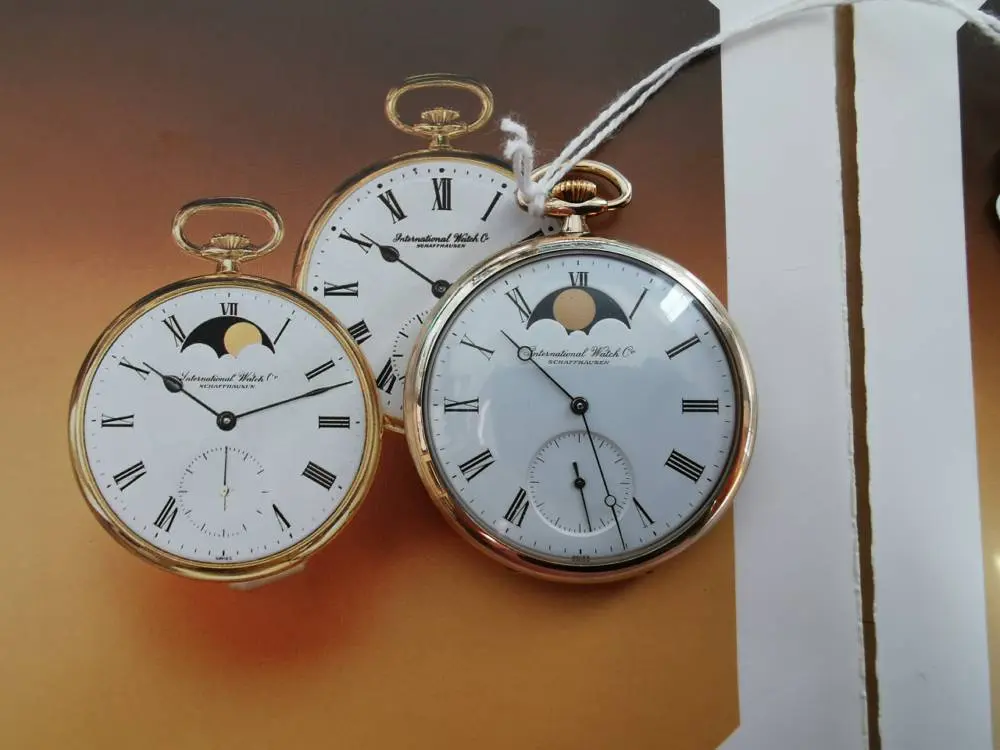
The result was the Reference 5251, launched in 1984 and quickly nicknamed the "Giant Portofino." True to its pocket watch ancestry, the 5251 wore a 46mm yellow gold case, making it an outlier in an era when 36mm was considered bold. The movement was Kurt Klaus's hand-wound caliber 9521, directly inherited from the pocket watch platform. With Breguet hairspring, a Glucydur balance wheel, and roughly 350 pieces produced in total, the 5251 was more a demonstration of intent than a commercial proposition. It said: IWC knows how to make a beautiful dress watch. Watch what comes next.
What came next was the Reference 3513, the everyday Portofino. At 34mm in yellow gold or stainless steel, powered by a reliable automatic with date, the 3513 became the quiet backbone of the collection for nearly two decades. It was a watch without agenda, content to be exactly what it was.
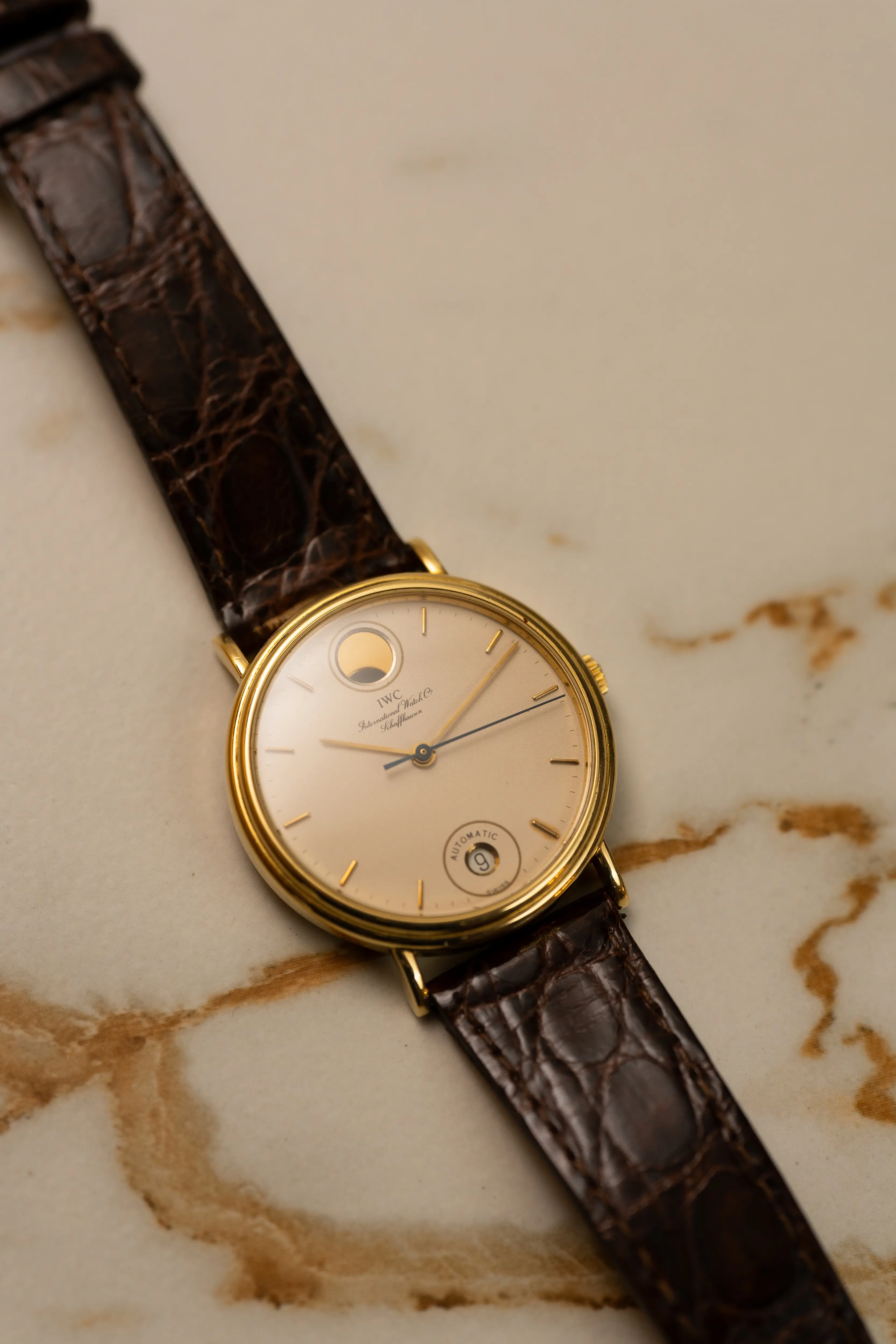
The 3550-01: The First Portofino Moonphase in a Modern Case
Between the theatrical 5251 and the restrained 3513, IWC introduced the Reference 3550-01, the first Portofino to pair a standard wristwatch case with an automatic movement and a moonphase complication. Produced from 1984 to 1986, the 3550-01 kept the 34mm case of the 3513 but added a moonphase display and date window, giving the collection its most complete expression of what a dress watch could be.
It was, in a sense, the watch the 5251 had been pointing toward: the complications of a pocket watch tradition, scaled to fit a wrist and driven by an automatic movement. Production was short, and the reference did not overstay its welcome. That brevity is part of what makes examples from this run compelling to find today.
Aesthetics
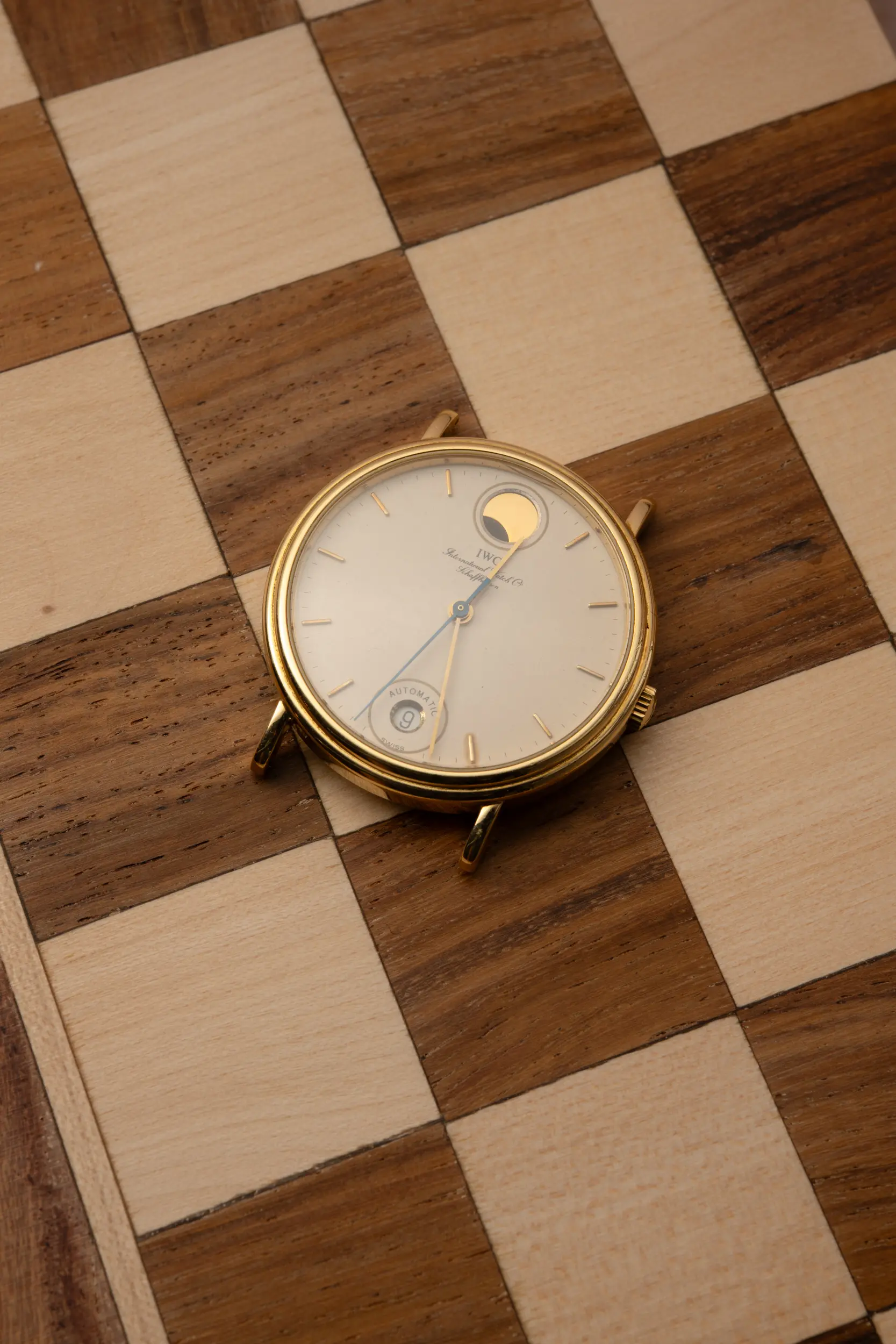
The dial of the 3550-01 is a study in hierarchy. The base is warm white, closer to cream than to the cold white of a contemporary dress watch, with a quality that suggests age and intention rather than sterility. Applied gold hour markers sit flush against it, catching light without demanding attention. The hands, slender and gold-toned, move with the authority of something that has been doing this for a long time.
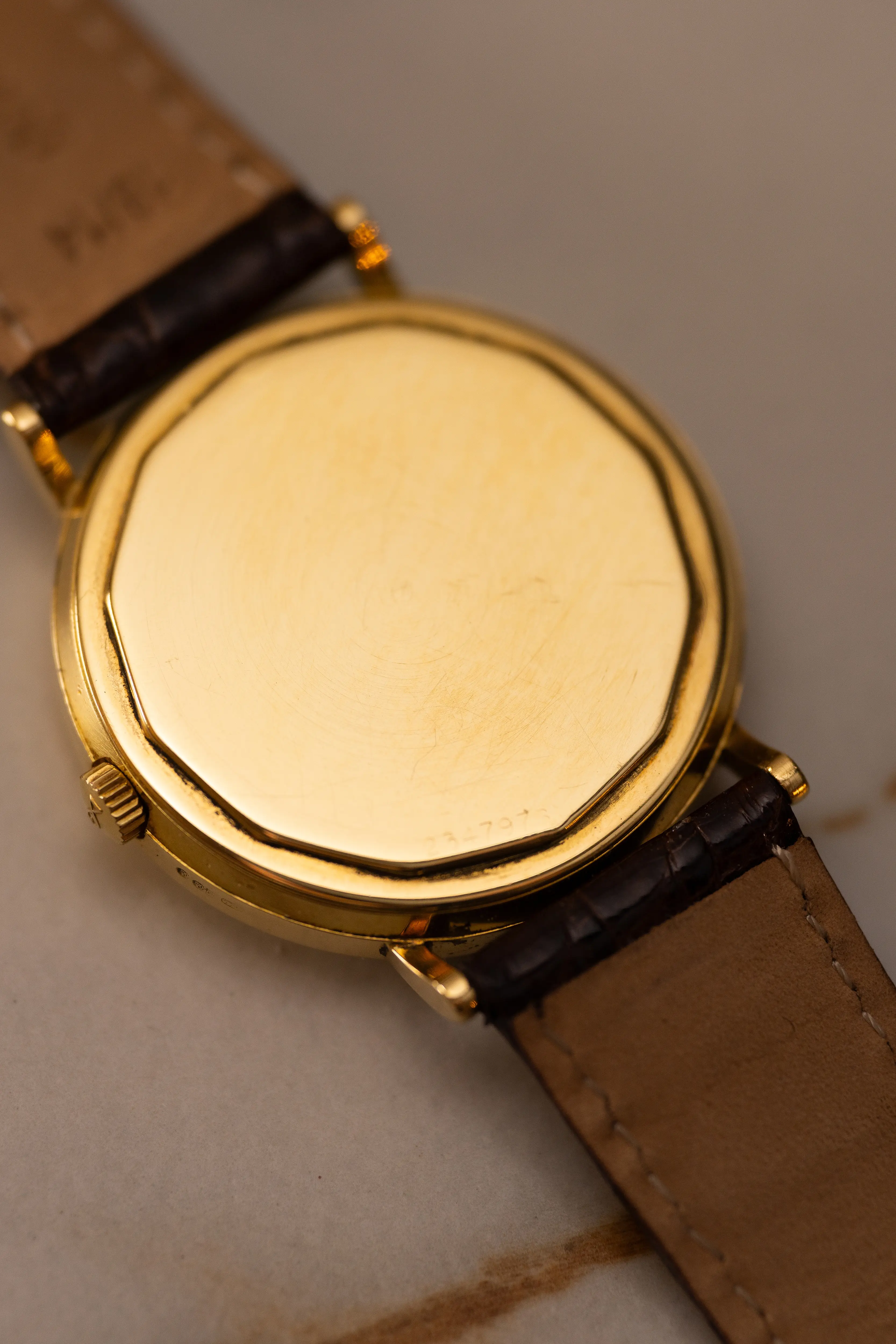
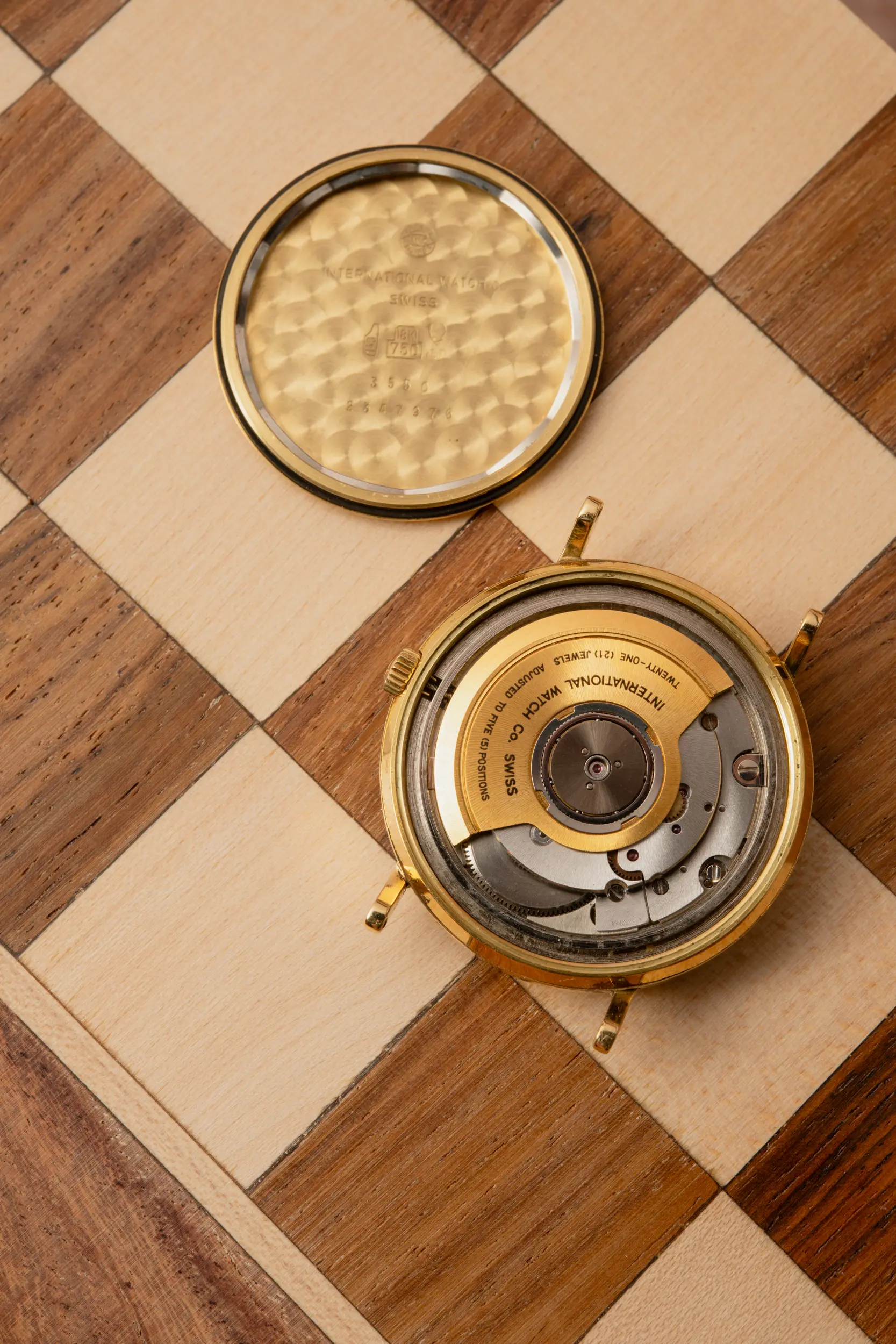
Case. The case is 18-karat yellow gold throughout, 34mm in diameter with an 18mm lug width. Finishing is fully polished, which is the correct choice for a watch that has nothing to prove through surface complexity. The lugs curve gently to follow the wrist. The crown is unsigned and proportioned correctly. The caseback is solid.
Moonphase at 12 o'clock. The moonphase aperture sits at the top of the dial, and this is where the watch earns its keep. The sky is a deep, saturated blue. Against it, the moon is rendered in gold, advancing through its cycle with the unhurried logic of something that has been keeping this particular appointment for a very long time. The stars that populate the background are small enough to feel celestial rather than decorative. A lesser execution puts the stars too large and the whole thing reads as whimsy. Here they recede just enough to let the gold disc take its rightful place.
Date window at 6 o'clock. A circular date aperture sits at six o'clock, framed neatly and sized to inform rather than intrude. It balances the moonphase above it and gives the dial a quiet vertical axis that rewards a second look.
Blue seconds hand. The seconds hand is blue, a clean, saturated blue with no equivalent anywhere else on the dial. In theory it should be an editorial mistake. In practice it is the one decision a confident designer makes after every other choice has been restrained: a single note of colour that sharpens the entire composition without disturbing it.
Movement
The 3550-01 is powered by the IWC Caliber 3755, built on the IWC 3752 base. The movement beats at 28,800 vibrations per hour, carries 21 jewels, and delivers a power reserve of 42 hours, honest and capable numbers for an automatic dress movement of the mid-1980s.
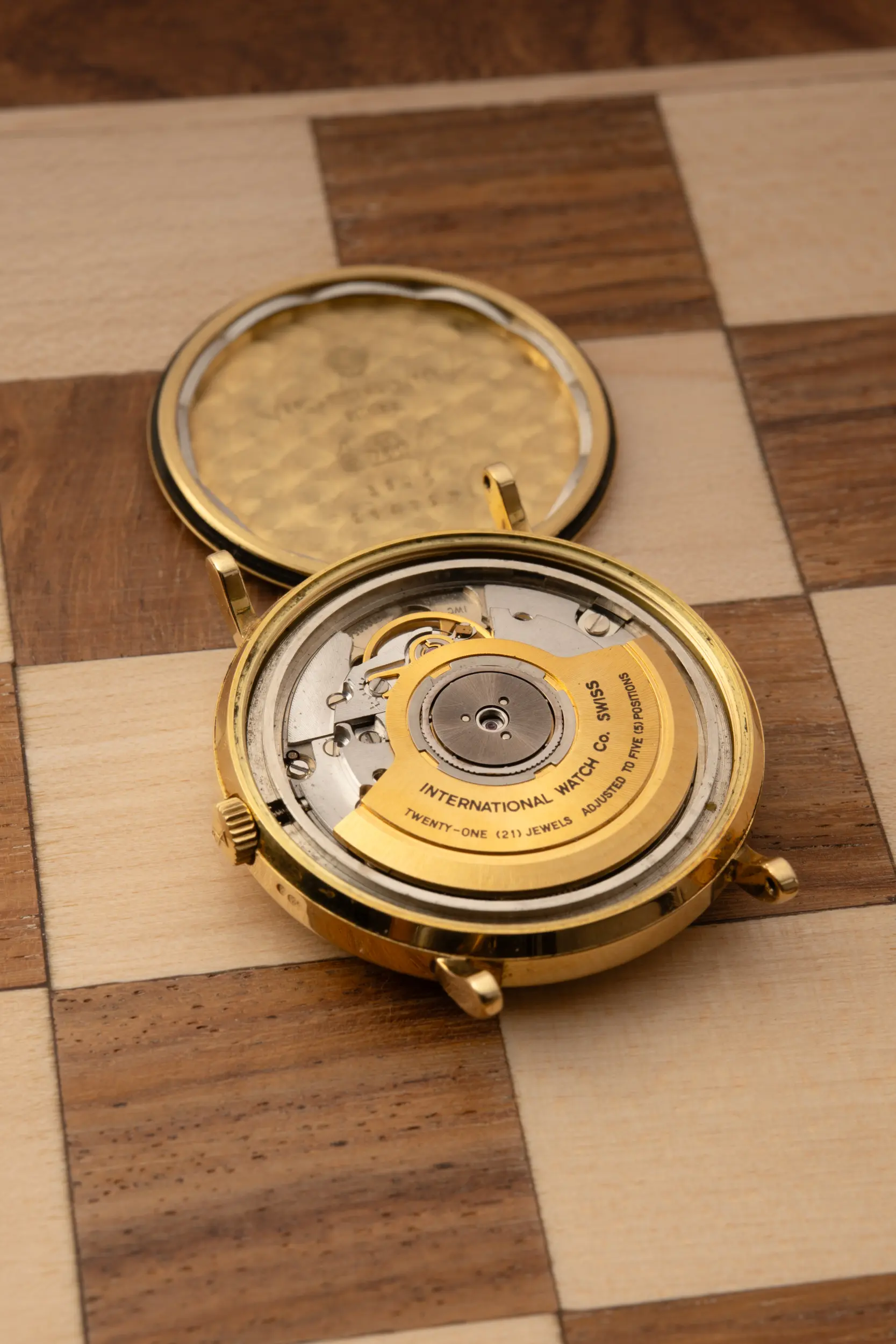
The moonphase display operates through a standard mechanism that tracks the 29-day, 12-hour, 44-minute lunar cycle in discrete steps. It requires a manual correction of approximately one day every two to three years. That is not the mathematical precision of IWC's perpetual calendar movements, but it is practical, and it transforms what could be a maintenance obligation into an occasional ritual. Winding the crown, aligning the moon: it is one of the small satisfactions that mechanical watchmaking offers and that quartz never could.
Wearing It
Put the 3550-01 on a leather strap, the original caramel-toned calf is correct, though a dark burgundy or a warm tobacco crocodile elevates the watch further, and you will notice how little it asks of you. At 34mm, it disappears under a shirt cuff. It is a thin watch.
It's a discrete watch, but nontheless a statement piece from this era.
Finding One Today
Examples of the 3550-01 appear at auction and through specialist dealers, always in 18-karat yellow gold, the only metal in which this reference was made. The production window of 1984 to 1986 was short, which keeps supply limited without making the watch genuinely rare. Good pieces surface with enough regularity to reward patience.
Luckily, we have one in our store and you can get it if it's still available.
Condition assessment requires attention to a few specific points. The moonphase disc should be examined carefully: the gilt stars are the first detail to suffer from improper servicing or rough handling, and a repainted or replacement disc changes the character of the watch considerably. The dial itself, with its warm white base, should show no water damage or discolouration beyond the patina of honest age. Service history on the Caliber 3755 matters; the movement is robust but is now approaching forty years old and deserves a proper service if it has not had one recently.
Expect to pay a meaningful premium over contemporary steel alternatives. The 18-karat case accounts for part of that, but so does the scarcity of clean examples from a run that never aimed for volume. This is a watch that was designed to last a lifetime, and the ones that have been cared for look exactly like that.
The Portofino 3550-01 does not generate debate at collector meetups or anchor auction recaps. It is quieter than that, and more certain of itself. Forty years on, it continues to make the case that restraint is its own sophistication, one blue seconds hand at a time.
Comments
Comments are coming soon. In the meantime, share your thoughts with us on social media.